In this piece, you’ll learn:
People who go to arts events usually don’t stop coming because of one problem. More often, they drift away because of repeated organizational mistakes. This is most prevalent in communications, where systems don’t share information and patrons lose trust. The ticketing system tracks who buys tickets, the fundraising system tracks who donates, and email software tracks who opens messages. Because these systems don’t connect, the organization can’t see the full picture of what a patron does. The cost never shows up as a line item in the budget.

Nearly a decade ago, we were brought into a performing arts organization to bring together its marketing, fundraising, and major-donor platforms. As we examined the data, we found duplicate patron records and overlapping communications. Development sent its own appeals, marketing ran its own promotions, and the board ran a separate major-donor outreach effort. Their messages sometimes conflicted, and no one had a complete view of what an individual patron was receiving.
Patrons were becoming frustrated and pulling away. Each department had its own reasons for reaching out, but together those efforts were damaging the relationships they were meant to maintain. Over time, fewer people renewed their memberships, email lists shrank, and digital tools didn’t work as well as people hope. There was no budget line for the cost of fragmented communications. The organization experienced that cost through weakened relationships, lost attendance, and missed contributions
To address the issue, we consolidated the platforms and de-duplicated their records and combined the history of patrons across the three platforms so teams could coordinate communications and see patron activity across the organization. The work began with connecting the new and old software across all platforms via api and continued with providing fresh data sets for the client. This gave marketing, development, and the board a shared basis for deciding whom to contact, when, and with what message.
Over the following two years, the organization reported that it had regained most of the patrons it had lost. Returning patrons also gave more and attended more performances. Things start to get better when the tools an organization already uses can share information and help everyone see the full story of each supporter.
In a typical mid-sized theater, different types of information are kept in different places. People who buy single tickets or have subscriptions are listed in the ticketing system, like Tessitura, Spektrix, or AudienceView. The fundraising team keeps track of donors in a different system, like Raiser’s Edge or Salesforce. When the marketing team sends out emails, they might use tools like Mailchimp or Constant Contact, and usually have to move contact lists by hand. Sales from the snack bar or gift shop are recorded in Shopify or another checkout system.
The website is also kept separate and is often ignored when thinking about patron information. Tools like GA4 can see how people use the site, but when someone buys a ticket, that usually happens on a separate company’s website, so tracking is lost at that point. Even theaters that use Tessitura for both tickets and donor tracking might still use outside tools for emails and website activity.
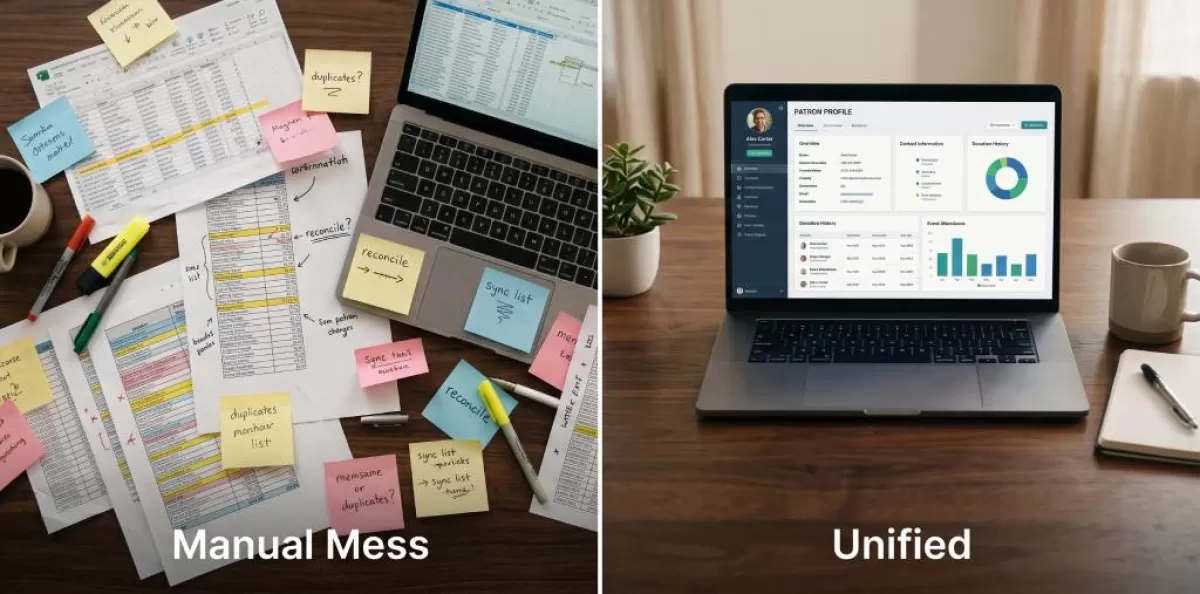
If someone wants to answer questions like “How many subscribers also donate?” or “Which people bought single tickets three times last season but never subscribed?” they have to export data, compare lists by hand, and try to figure out if names like “Bob Smith” and “Robert Smith” are the same person.
Most organizations are in the same position. Omatic’s 2026 Nonprofit Technology Ecosystem Trends Report surveyed 800 nonprofits and found that 70 percent run five or more core software systems, up from 62 percent the year before.
When the same person is in the system more than once, but with different names or email addresses, the marketing team might send them the same email over and over, which wastes money and can be annoying. It can also be confusing for patrons. For example, a person who just bought a subscription might still get an email that says, “We miss you,” because the system doesn’t know they are already a subscriber. That kind of message can make loyal supporters feel like the organization doesn’t pay attention to them.
Validity’s 2022 State of CRM Data Management report found that 44 percent of companies believe they lose more than 10 percent of annual revenue to poor CRM data. That survey covered all industries, and arts organizations have thinner margins to absorb it.
Campaigns that can’t be personalized
Spektrix’s performing arts data shows that emails sent to specific groups get more than twice the clicks of general emails. To do this well, you need to correctly identify patrons. If systems can’t tell a regular dance fan from a family who attends matinees, everyone gets the same newsletter. But organizations with connected data can invite dance fans to special events like members-only rehearsals.
When information is scattered across different systems, organizations can get the wrong impression about what’s actually working. For example, a sold-out show might seem like a big win, but if most of the people who bought tickets never come back, it’s not as good as it looks. Or, if lots of people seem to open emails, it might really just be the same loyal fans opening them every time. You can’t see these patterns clearly if ticket sales and email results are kept in separate places.
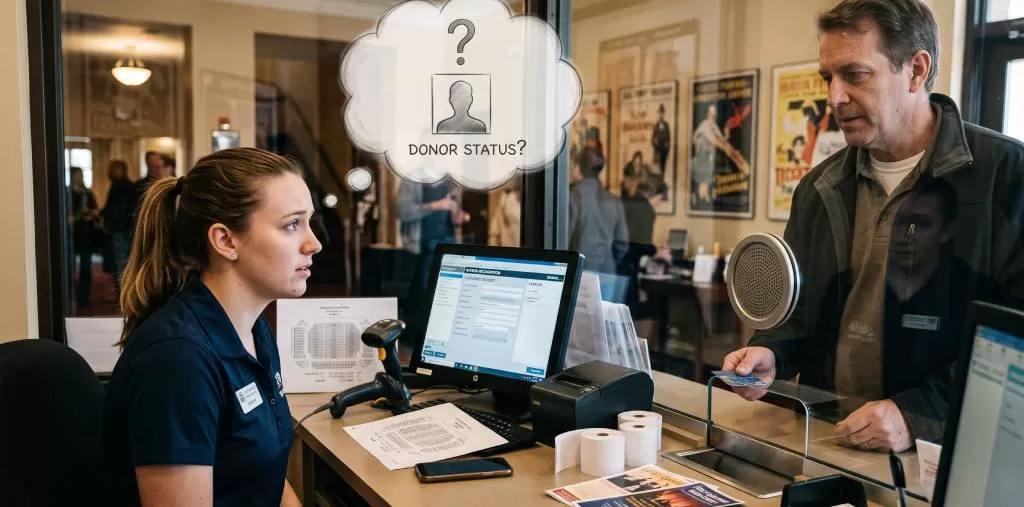
Imagine a loyal donor walks up and buys a ticket at the door. The person working the ticket booth just sees a name and doesn’t realize it’s someone who’s given a big donation before. The staff member who handles donations, using a different system, never finds out the donor even came to the show. No one says thank you or lets them know about upcoming fundraising events, so a simple chance to make a connection is lost.
Now, think about this happening over and over during the season. A recent study found that only about 43 percent of donors keep giving year after year, and more than half don’t donate again the next time. When information is scattered and systems don’t talk to each other, it makes this problem even worse.
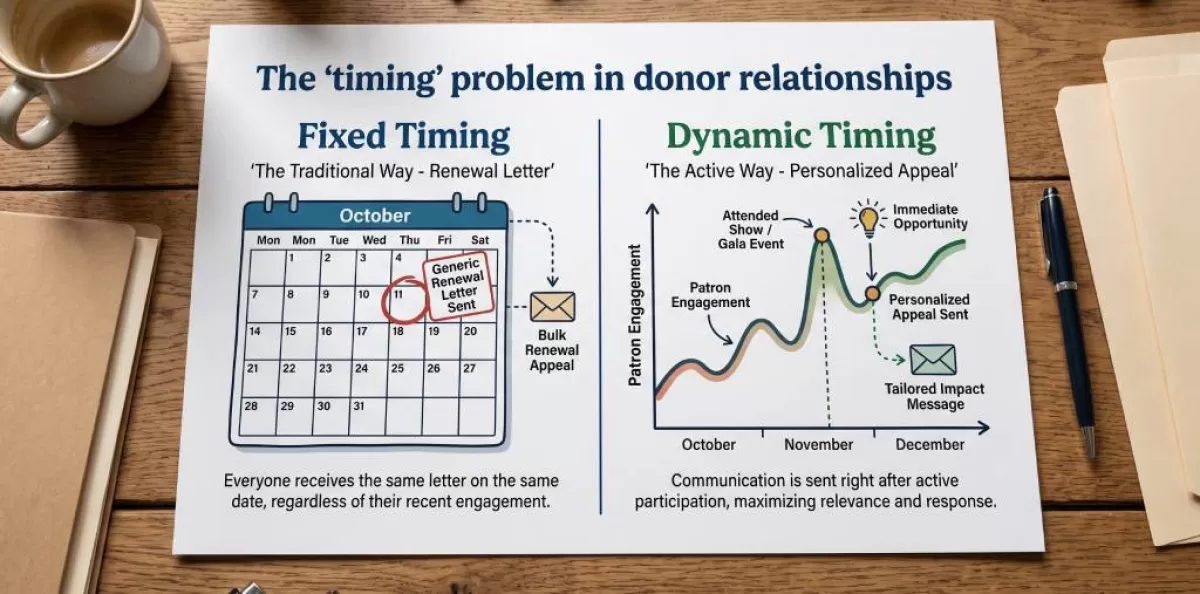
Timing. A donor who recently went to three shows is a good prospect. If the fundraising team can’t see attendance, renewal requests go out on the fiscal-year calendar instead of when the patron is most engaged.
Tone. A $10,000 donor who receives a generic “give $25 today” appeal learns how little you know about them. So does a ten-year subscriber who gets a first-timer discount code.
Conversion. Most people who might donate in the future are already in the ticketing system because they have bought tickets before. Spektrix, a ticketing company, found that less than 1 percent of phone and in-person ticket transactions include a donation, compared with about 6 percent online. That suggests a built-in prompt at online checkout works far better than relying on box office staff to ask. If an organization can’t tell which people come to a lot of events but haven’t donated, it could miss chances to ask the right people for support.
Having information in different places used to be just a hassle, but now it’s a real problem because of artificial intelligence. New tools that are supposed to help—like ones that group people into different audiences, send personalized emails, or suggest tickets to buy—can only do their job if all the information is correct and in one place. If a person’s details are missing or they’re listed more than once, these tools can’t give accurate answers or helpful suggestions.
In February 2025, Gartner reported that 63 percent of organizations either lack or aren’t sure they have the right data management practices for AI. It also predicted that through 2026, organizations will abandon 60 percent of AI projects that aren’t supported by AI-ready data. Arts organizations have less staff time than most to clean up after a failed rollout.
My advice: don’t buy an AI marketing tool until your ticketing and donor data agree on who your patrons are. The tool might technically work, but the answers and suggestions it gives will only be as useful as the information behind them.
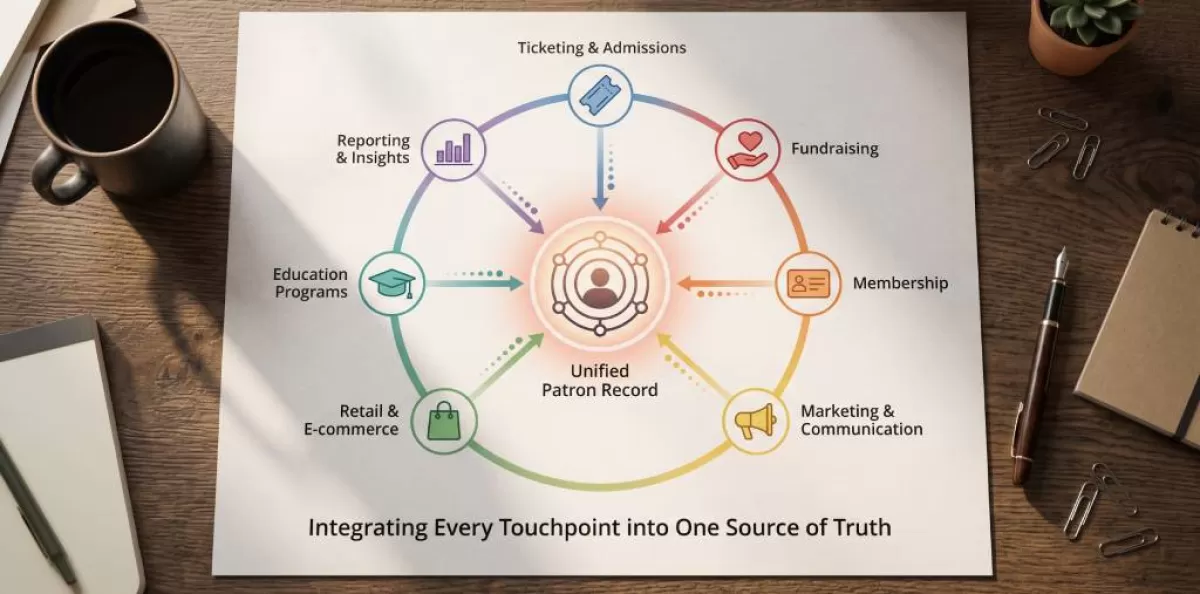
Most organizations don’t need to get rid of their ticketing system or buy a brand-new database. Instead, it’s smarter to make the systems they already use work together, so there’s just one record for each patron that everyone—box office, fundraising, and marketing—can see. Some software, like Tessitura and Spektrix, already do a lot of this on their own. If that’s not the case, there are special tools that help different systems share information without needing to replace anything. When everything is connected, staff can easily look up a patron’s full history, send emails based on what they’ve done lately, and offer memberships or donation requests that actually make sense for each person.
Before you buy a new software tool, spend some time looking at what you already use. Write down every place you keep information about your patrons, like your website or any programs that track how people use your site. See which systems share information with each other on their own, which ones need you to move lists by hand, and who is responsible for each system. Start by connecting your ticketing and donor systems first, because this change usually has the biggest impact for arts organizations. Make sure this main connection works well before you try to connect other systems.
If your team spends more time assembling reports than acting on them, you’re already paying the cost. For more on how cultural organizations use connection tools to link ticketing, donor, and marketing data, see our past article on “How Museums Are Using iPaaS to Unify Ticketing, Donors & Marketing Data.”
The problem with scattered data doesn’t show up as a clear expense in the budget, so it’s easy to overlook it. Instead, you see the effects in a donor who attends a show but never gets a thank you, a loyal subscriber who gets an email saying “we miss you,” or a renewal message sent just because it’s that time of year, not because the person is actually interested. These issues don’t seem like a money problem at first, but over time they lead to fewer donations and more empty seats.
The solution isn’t to buy more software. It’s to make sure the systems you already have work together and agree on who your patrons are—starting with your ticketing and donor information. Once that’s in place, everything else, including new AI tools, will work much better.
