In this piece, you'll learn:
Search visibility for artists is becoming less dependent on individual keywords and more dependent on whether an artist becomes recognizably associated with a particular subject, style, technique, or body of work.
That distinction matters in the art world because people rarely discover artists through a single search and immediately buy. Discovery usually happens over time. A collector sees an image, encounters the artist again in a gallery listing, finds an interview, sees another work on social media, researches the technique, visits the artist’s website, and eventually makes an inquiry.
Due to the nature of knowledge, the algorithms behind Search engines and AI tools will converge over time. The algorithms evaluate whether a page contains the right density of a search phrase and try to determine whether a person, organization, or website has a meaningful, consistent relationship with the subject being searched.
This is sometimes described as topical gravity or topical authority. For an artist, however, authority is not established through text alone. It comes from a combination of artwork, documentation, exhibitions, criticism, attribution, professional recognition, and the information surrounding the work.
That makes topical authority in the art sector fundamentally different from topical authority in many other industries.
Art Is Already Searched as a Subject, Not Just a Keyword
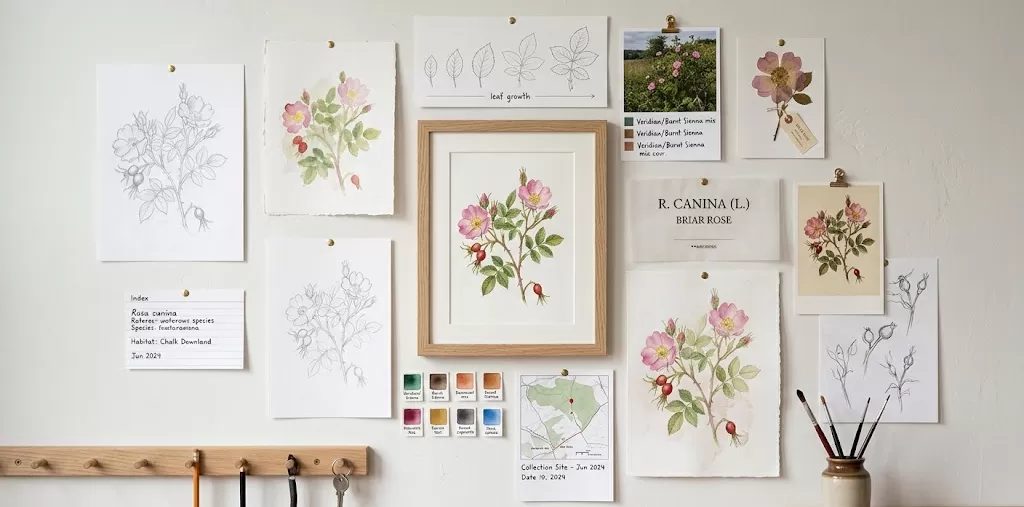
Consider a botanical illustrator whose work combines traditional watercolor technique with scientifically accurate plant studies.
Someone discovering this artist may initially search for “botanical illustration,” but the research is unlikely to stop there. A collector might investigate contemporary botanical illustrators, original botanical paintings, botanical art commissions, watercolor plant illustration, botanical prints, scientific illustration, historical botanical art, or how original botanical artwork differs from decorative prints.
A student might follow a different path, searching for watercolor techniques and botanical drawing, ranging from paper selection and pigment choices to botanical illustration courses.
A publisher might be interested in editorial commissions, book illustration, scientific accuracy, licensing, usage rights, or reproduction quality.
These searches are different, but they occupy the same subject territory.
Search engines and AI systems increasingly connect those questions rather than treating each as unrelated. Google, for example, has explicitly described using query fan-out in AI search, where one complex question can lead to multiple related searches before it assembles a response. Its visual search systems apply a similar approach to the objects and details contained within images.
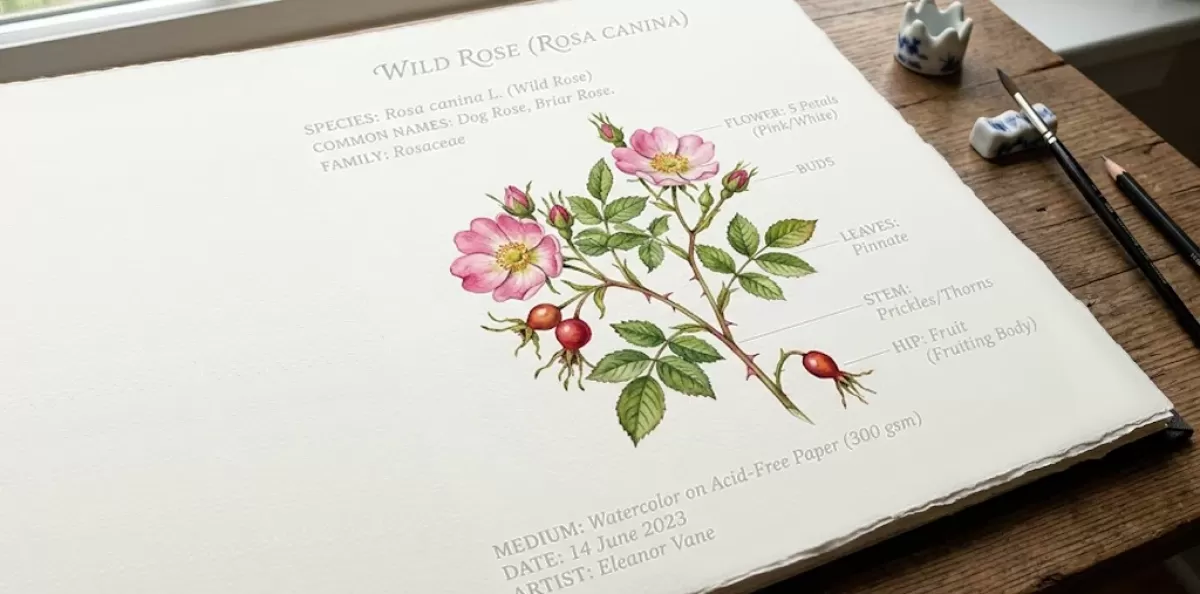
For an artist, this means that ranking for the phrase “botanical illustrator” is useful, but it is no longer the entire objective. The bigger opportunity is to become one of the artists search systems repeatedly associate with botanical illustration.
This is where the art niche differs sharply from most SEO discussions.
An accountant, attorney, or software company can establish much of its online authority through written information. An artist cannot.
The artwork itself is evidence.
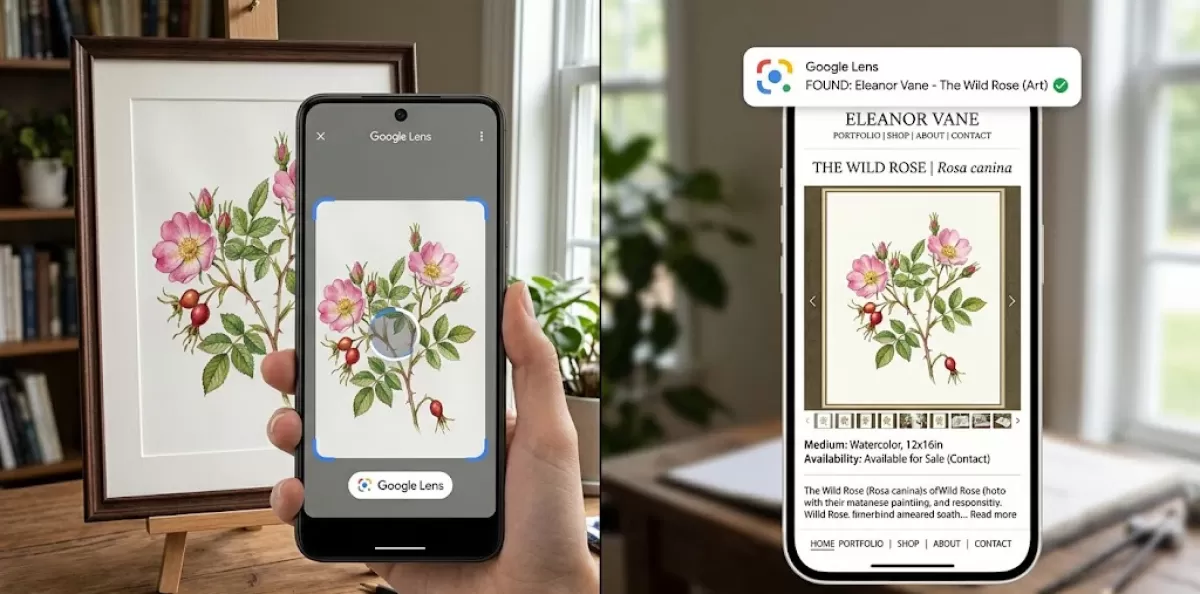
Search increasingly allows images to become queries. Google Lens can identify objects and visual characteristics within an image, return similar images, identify websites containing the same or related images, and provide contextual information around what the user is seeing. Google has also integrated multimodal search into AI Mode, allowing users to upload an image and ask questions about it.
Google Search accepts text, images, files, videos, and other inputs through its AI search experiences. This means the distinction between text search and visual search is becoming progressively less important.
For the botanical illustrator, topical authority therefore depends partly on whether the work is discovered, interpreted, connected with the artist, and placed in the proper context.
An image called IMG_4837.jpg appearing on an otherwise empty portfolio page provides relatively little information.
The same painting presented on a dedicated page with the artist’s name, title of the work, species depicted, medium, dimensions, year, description, exhibition history, and surrounding contextual information provides search systems with much more evidence about what the image represents and who created it.
Image filenames, captions, alt text, page titles, surrounding copy, internal links, structured information, and clear attribution all help connect the visual work with the artist and the subject.
This does not mean writing awkward descriptions around every image to satisfy a search engine. It means documenting artwork properly.
That documentation has always had value in the art world. Digital search gives it an additional function.
An artist who creates fifty highly relevant botanical works but uploads them without useful titles, descriptions, attribution, or context may give search systems surprisingly little material to establish an association.
An artist with a smaller but well-documented body of work may establish a clearer relationship between their name and the subject.
Proper documentation can be made much more concrete. An artist does not need to turn a portfolio into a technical SEO project. Still, several relatively simple changes can make a body of work easier for search systems to identify and connect with its creator.
One is structured data. Schema.org includes a specific VisualArtwork type that can be added to an artwork page using structured data. It can identify the work's name, artist, image, medium, surface, dimensions, edition information, and other characteristics. For the botanical illustrator, a painting page could identify the work as a VisualArtwork, connect it to the artist as its creator, specify watercolor as the medium and paper as the surface, and identify the image representing the work. The information is already present in many artists' records and catalogs. Structured data makes some of those relationships machine-readable.
Image naming also deserves more attention than it normally receives. A file called IMG_4837.jpg says almost nothing. A filename such as rosa-californica-watercolor-2026.jpg provides limited but useful context before a search engine has interpreted the rest of the page. Google specifically recommends short, descriptive filenames rather than generic camera or sequential filenames.
Alt text has a more important role, although it should not be treated as a place to insert a collection of search phrases. Its primary purpose is accessibility: it describes meaningful visual information for people who cannot see the image. That same description also helps search engines interpret the image. For the botanical illustrator, useful alt text might identify a watercolor illustration of Rosa californica showing the flower, leaves, and stem when those details are relevant to understanding the work. Repeating “botanical art, botanical artist, botanical illustration, watercolor botanical artist” would provide a worse experience for users and weaker information about the actual image.
The surrounding page should carry information that does not belong in the alt text: title, artist, year, medium, dimensions, species, collection or exhibition history, availability, licensing information, and a short description where appropriate. Alt text, captions, filenames, structured data, and page content have different jobs. They work better when each supplies accurate information rather than repeating the same search phrase.
Artists with substantial portfolios should also check whether their images are actually being exposed to search engines. Google supports image sitemaps specifically to identify images it might otherwise fail to discover, including images loaded through JavaScript or buried deeper in a site. An artist with hundreds of works should not assume that because visitors can move through a portfolio, every image has necessarily been discovered and indexed.
Copyright and licensing information can be part of the same documentation. Google supports structured data and embedded IPTC metadata that can identify the creator, copyright information, licensing terms, and a page explaining how an image may be licensed. For photographers and visual artists, this is particularly useful because attribution and rights information can remain associated with an image as it moves beyond the original artwork page.
Making artwork easier to discover introduces an obvious tension for working artists. The same accessibility that can help search engines correctly identify and attribute an image can also make the work easier for automated systems and other websites to encounter.
A combination of tactics can improve search visibility while preventing every form of copying or automated collection. Artists therefore need to separate several decisions that are often treated as one: whether the work should appear in search, whether high-resolution files should be publicly available, whether an image may be reused, and whether automated AI systems should be allowed to use site content.
Documentation always helps. Clear copyright notices, creator information, licensing terms, metadata, and establishing attribution and communicating permitted uses are very important. Artists should then choose the resolution they publish in and decide whether unobtrusive watermarking is appropriate for particular images. A watermark can discourage some unauthorized reuse, although a large watermark may interfere with the artwork itself and with the presentation expected by collectors, galleries, and curators. There is no universal answer.
Controls for AI systems are developing separately. For example, Google provides Google-Extended, a robots.txt control that can restrict use of crawled material for certain Gemini training and grounding purposes without removing the site from ordinary Google Search. That distinction matters: an artist does not necessarily have to choose between being searchable and exercising some control over other uses of the site.
None of these measures guarantees that an image will never be copied or collected. Robots directives depend on automated systems honoring them, metadata can be stripped, and anything displayed publicly can be copied. The practical objective is therefore not to promise technical prevention. It is to decide deliberately what version of the work is made public, establish ownership and licensing information clearly, and use the available controls according to the artist’s tolerance for discovery versus reuse.
Once an artist has identified the subject they want to be known for, the website should provide more than a portfolio grid.
Using the botanical illustrator as the continuing example, the site might clearly establish that botanical illustration is central to the artist’s practice.
Individual works provide visual evidence. Portfolio collections demonstrate depth. Project pages explain commissions. Articles can address materials, process, techniques, historical influences, scientific accuracy, reproduction, collecting, or other aspects of the practice.
The purpose is not to manufacture articles to produce more pages.
Each page should add information that helps someone understand the artist or the work.
This distinction matters in art because audiences quickly recognize generic marketing content. Collectors, curators, artists, and gallery professionals are accustomed to reading artist statements, exhibition material, criticism, catalogs, interviews, and academic writing. Content written primarily to repeat search phrases can undermine credibility rather than create it.
The artist therefore has to build topical depth without sounding as though they are trying to build topical depth.
The safest method is to write about things the artist genuinely knows.
A botanical illustrator can explain why particular pigments were chosen for a painting, how botanical accuracy affects composition, how specimens are researched, what changes when an illustration is produced for publication rather than exhibition, or how original watercolor behaves when reproduced as a print.
That information establishes authority naturally because it comes directly from the practice.
The content should serve the person interested in the art first. Search visibility becomes a consequence of making that knowledge accessible.
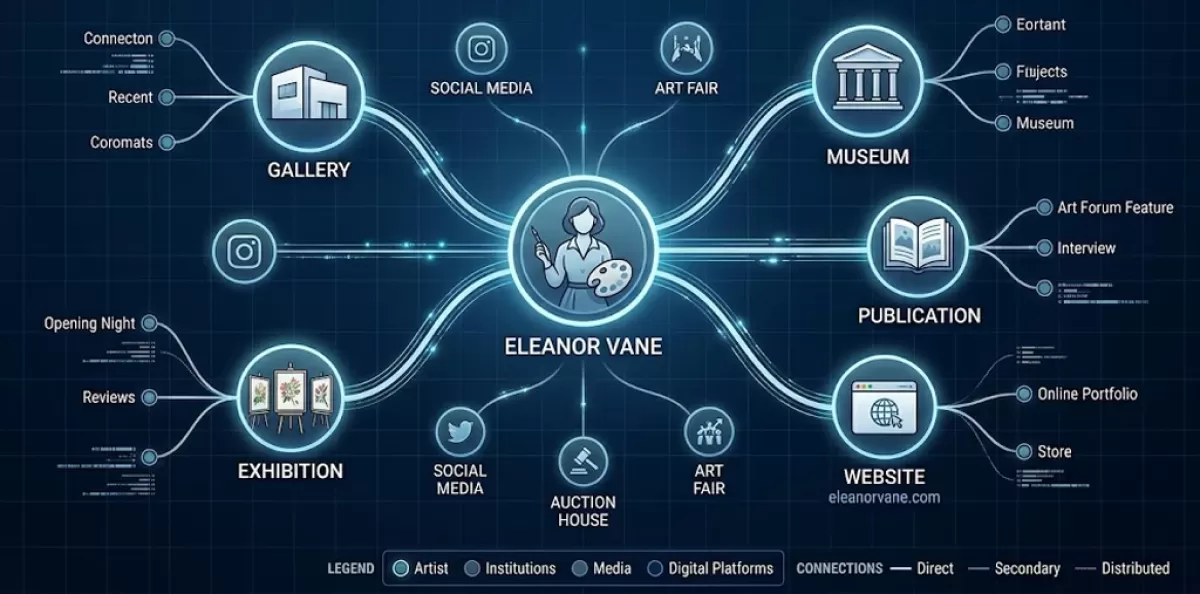
A second major difference is that authority in art has always been distributed.
An artist cannot establish their entire reputation by making claims on their own website.
Gallery representation matters because another organization has chosen to represent the artist. A solo exhibition provides evidence that a gallery or institution has devoted space and resources to the work. Inclusion in a curated group exhibition connects the artist with a subject, movement, medium, or group of peers.
Museum acquisitions provide another level of validation. So do residencies, juried exhibitions, grants, awards, catalog essays, curator statements, and serious critical coverage.
Coverage in established art publications such as Artforum, Hyperallergic, or Colossal can create additional associations. Regional arts publications may be equally important for artists whose reputations are closely tied to a particular city or region.
Auction and resale records can provide evidence that the artist’s work exists within a secondary market. Gallery inventory pages, art-fair listings, exhibition archives, institutional collections, and artist databases can reinforce the artist's identity and the nature of the work.
These function differently from conventional SEO backlinks.
A backlink is technically a link from one website to another. Art-world authority is broader. A museum collection page naming an artist, a gallery exhibition archive, a curator’s essay, and an independent review all establish relationships between entities even when the primary value of the reference is not the hyperlink itself.
For the botanical illustrator, a feature in a botanical art society publication, participation in an exhibition devoted to scientific illustration, representation by a gallery specializing in works on paper, or inclusion in a museum collection may each reinforce the same association.
The important point is consistency.
If the artist is branded as a botanical illustrator, then the site gallery must emphasize botanical work, exhibition listings must primarily show botanical subjects, published interviews discuss botanical technique, and their images repeatedly appear in that context, the association becomes substantially clearer.
No single page creates that authority.
The network of evidence does.
Artists also need to distinguish consistency from duplication.
A gallery biography does not need to copy the artist’s website word for word. An Instagram profile, museum biography, exhibition description, and press article should not all sound identical.
What should remain consistent is the underlying identity.
If the botanical illustrator’s website presents the artist primarily as a botanical and scientific illustrator while gallery pages describe them as an abstract painter and professional profiles emphasize commercial graphic design, the artist becomes harder to categorize.
That may accurately reflect a multidisciplinary career, but it also means the artist should decide which associations matter most for discovery.
Search systems are trying to understand entities and their relationships. The clearer and more frequently supported those relationships become, the easier it is to associate the artist with the relevant subject.
Another limitation in conventional search strategy is the assumption that visibility ultimately ends in an online transaction. For many artists, that is not how the market works.
An original artwork may begin with an email, a studio visit, or an exhibition. Topical authority therefore should not be measured only by ecommerce revenue or immediate conversions.
For the botanical illustrator, meaningful outcomes might include qualified commission inquiries, licensing requests, gallery introductions, invitations to exhibit, or increased referral traffic from arts institutions. Some of these outcomes can be measured directly. Others have to be tracked manually.
That makes analytics more complicated, but also more realistic.
A visitor who discovers an artist while researching botanical illustration and returns six months later through a gallery website may be commercially important even if the original website visit did not produce a measurable conversion.
Art purchases frequently have long consideration periods, particularly as prices increase.
Visibility should therefore be evaluated as part of reputation development, not merely transaction generation.
Keyword rankings still have value. If the botanical illustrator begins ranking for relevant searches, that is useful evidence that visibility is improving. But the more important question is whether the artist is appearing across the subject as a whole.
Search the questions that collectors, publishers, students, designers, and curators might realistically ask.
Then examine the names and sources that repeatedly appear.
The objective is not necessarily to appear first for every question. It is to determine whether the artist is becoming part of the group of names consistently connected with the subject.
The same analysis should include image search. Search the work visually. Use image-based queries. Examine whether the artist’s images appear for relevant concepts and whether those images lead back to authoritative pages containing correct attribution. For visual creators, a topical visibility audit that ignores image discovery is incomplete.
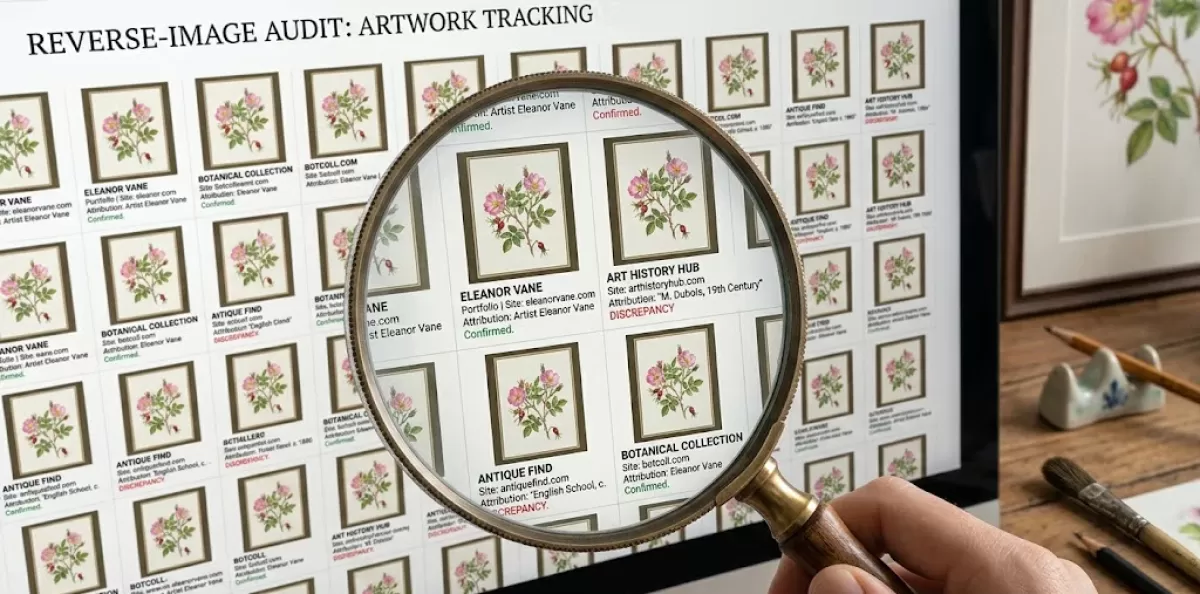
A useful first test requires no analytics software. Take five to ten representative works and search each one using Google Lens and a reverse-image service such as TinEye. Look at what comes back.
Does Google recognize the subject of the image? Does it connect the artwork with the artist? Does the artist’s own website appear? Do gallery, exhibition, social, editorial, or marketplace pages appear? Are copies of the image appearing on sites the artist did not know about? When another site uses the image, is the artist correctly identified? Does the highest-ranking version lead to the artist, a gallery, an unrelated Pinterest page, or someone who has reproduced the image without attribution?
TinEye provides a somewhat different diagnostic. Rather than primarily looking for visually similar subject matter, it uses image matching to locate copies and modified versions of the submitted image. That makes it useful for discovering where a particular artwork has traveled, including cropped, resized, or edited versions.
The results provide a simple picture of the artist’s current visual footprint. If Google Lens understands that an image depicts a botanical watercolor but does not associate it with the artist, attribution needs work. If the artist’s gallery appears but the artist’s own artwork page does not, the website may have an indexing or documentation problem. If none of the artist’s portfolio images can be found outside the site, the artist may have very little visual authority beyond their own domain. If dozens of copies appear with inconsistent attribution, the problem may be rights management rather than discoverability.
Repeat the test periodically using the same works, so you have a basic visual-search audit showing whether the work is perceived correctly online. And whether the viewers understand what it represents, and where authoritative information about it lives.
Once the botanical illustrator has developed a recognizable presence around botanical illustration, expansion becomes easier.
The artist might develop stronger visibility around scientific illustration, natural-history illustration, botanical commissions, botanical printmaking, or particular plant subjects.
These are logical extensions because the existing body of work provides evidence supporting them.
Expanding immediately into unrelated areas is less useful. An artist does not need to become an authority on art broadly. In fact, attempting to do so may dilute the association that actually differentiates the work. The strongest territory is usually where artistic practice, professional history, external recognition, audience interest, and commercial opportunity overlap.
The central idea behind topical authority is relatively simple. Being discoverable for hundreds of unrelated terms is not the same as being recognized for something. For artists, recognition has always mattered more.
Before search engines existed, artists built associations through exhibitions, critics, galleries, catalogs, museums, teachers, collectors, movements, and other artists. Digital systems are now attempting to interpret many of those same relationships at enormous scale.
The practical response is not to turn an artist’s website into an SEO publication. It is to document the practice properly.
Show the work clearly. Identify it accurately. Explain the subjects and processes where explanation is useful. Build a coherent body of material around the areas that genuinely define the practice. Make images discoverable and attributable. Maintain consistent positioning across the places where the artist appears. Develop the kinds of independent references that already carry weight in the art world.
Then measure whether those combined signals are causing the artist to appear more often when people and AI systems explore the subject. For a botanical illustrator, the goal is not simply to rank for “botanical illustration.” The goal is that when someone begins exploring botanical illustration, the artist becomes difficult to avoid. That is a much higher standard than keyword ranking. It is also much closer to how reputation has always worked in art.
Ranking for a keyword tells you almost nothing on its own. What matters is whether you become one of the names that keeps showing up when someone explores a subject — through a gallery listing, a museum collection page, a well-documented artwork page, a reverse image search that actually leads back to you. That kind of recognition isn't built through better meta descriptions. It's built the way it always has been in art: through documentation, consistency, and a body of work that genuinely holds together. The search systems are just getting better at noticing.
